
Carbon and Alloy Steel Grades

Carbon and alloy steels share several similar characteristics and can be used in many of the same industrial applications. While both materials have the same weight, the primary difference lies in their carbon content.
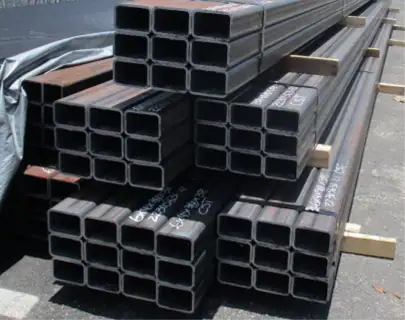
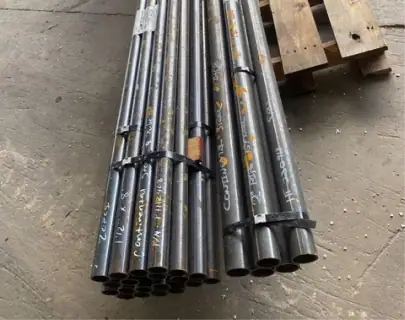
Carbon and Alloy Steel Grades

Carbon and Alloy Steel Grades

Understanding the Differences: Carbon Steel vs. Alloy Steel

Carbon steel consists mostly of carbon and iron, whereas alloy steel includes iron, carbon, and trace amounts of other elements, such as:

  • Chromium
  • Manganese
  • Molybdenum
  • Nickel
  • Silicon
  • Vanadium

These elements can significantly change the metal quality, adding hardness, strength, and excellent resistance to wear and corrosion.

Common Carbon Steel Grades and Specifications

Grade A36 A53 / A106 A500 / A513 A36 / A514 / A515 / A516 / A572 Gr 50  A572 Gr 50 / A588 / A606 Type 4 A615 / A847 / A992 1006–1050 Series (e.g., 1018, 1045) 12L14, 1215, 1144
ASTM Specification ASTM A36 ASTM A53, A106 Grade B’s/C’s ASTM A500, A513 ASTM A514, A515, A516 ASTM A572, A588, A606 ASTM A615, A847, A992 ASTM A1008–A1050 ASTM A108
Typical Forms Sheet, Plate, Bar Angle, Channel, Structural A53 - Pipe
A106 - Pipe and Tube Tubing, Structural Plate Plate, Beam, Sheet Rebar, Tube, Beam Bar, Sheet, Coil Bar (Cold Finished)
Applications General construction and structural uses Pressure and mechanical applications Structural tubing, mechanical tubing Pressure vessel and high-strength applications Weathering, bridge, and structural uses Structural reinforcement and construction Machining, cold-finished products Free-machining steels for precision components

Typical Alloy Steel Grades

Grade 4130 / 4140 / 4142 4330 / 4340 5160 / 6150 8620 / 8630 / 86L20 8740 / 9310 52100 / ETD 150
Common Elements Chromium, Molybdenum Nickel, Chromium, Molybdenum Chromium, Silicon Nickel, Chromium Nickel, Chromium, Molybdenum Chromium, Carbon
Applications Aircraft parts, gears, shafts Aerospace, defense, high-stress parts Springs, automotive components Case-hardened parts Gears, shafts, aircraft components Bearings, precision components

Carbon and Alloy Steel Grades FAQs

How Is Carbon Steel Classified?

Carbon steel can be classified into the following types:

  • Low carbon steel. Mild carbon steel grades are easy to manipulate but not as hard as higher-carbon steels. The composition of the low-cost material consists of 0.05% to 0.3% carbon content and up to 0.4% manganese.
  • Medium carbon steel. Grades range between 0.3% and 0.6% carbon content with 0.60% to 1.65% of manganese. The material is strong and ductile with long-lasting properties.
  • High carbon steel. The strong material holds its shape, making it ideal for wire and springs. It has a composition of 0.55% and 2.1% carbon content with 0.30% to 0.90% manganese, depending on the steel grade.

What Do the Numbers in the SAE/AISI Carbon Steel Grade Designation Mean?

The SAE/AISI system designates a four-digit numeric code to identify the composition of steel, as follows:

  • First digit. Indicates the primary alloying element of the steel (numbers range from 1 to 9)
  • Second digit. Defines the primary alloy group or subcategory of the steel.
  • Third and fourth digits. Specifies the approximate carbon content in the steel (in hundredths of a %).

For example, a code of 1018 indicates a carbon content of approximately 0.18%, and a code of 1045 indicates a carbon content of roughly 0.45%.

What Are the Main Groups of Alloy Steel That Continental Steel & Tube Company Supplies?

The main groups are as follows:

  • Bearing Steels (52100)
  • Chromium-Molybdenum Steels (41xx Series)
  • Nickel-Chromium-Molybdenum Steels (43xx/86xx Series)

Can Carbon Steel and Alloy Steel Be Heat-Treated?

Yes. The process can significantly enhance performance and improve mechanical properties, such as:

  • Durability
  • Hardness
  • Tensile strength

How Does Continental Steel & Tube Company Ensure Quality for Its Carbon and Alloy Grades?

We adhere to strict global regulatory standards, such as ASTM, AISI, and ASME. We also maintain ISO 9001:2015 certification and conduct rigorous independent inspections, raw material testing, and regular audits of partner mills to ensure the highest level of quality.

Continental Steel & Tube Company, Your Trusted Carbon and Alloy Steel Supplier

At Continental Steel & Tube Company, we supply common carbon steel material grades and low alloy steels from stock. As a leading global supplier with unsurpassed capabilities and decades of expertise, we also specialize in providing hard-to-find alloys, heavy carbon steel plates, and large carbon steel beams to meet the challenges of most projects.

Contact us today to learn more about our comprehensive selection of carbon and alloy steel. Our expert team can help you better understand the advantages of high-carbon vs. low-carbon steel, making it easier to select a type and grade that matches the requirements of your specific application.